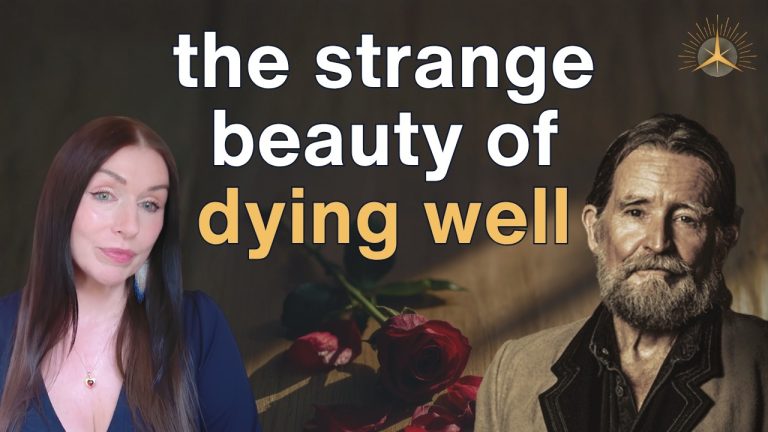
Stephen was recently interviewed by Paul Philipson on the Feelings with Strangers Podcast. This is what Paul had to say about their time together:
There are conversations that seem to happen at the very edge of what language can do. This is one of those.
Stephen Jenkinson has spent decades working in what he calls the death trade. Sitting with the dying, bearing witness to the end of life in ways that most of us spend our whole existence carefully avoiding. He wrote about it, spoke about it and then, just over two years ago, he walked into a neurologist’s office expecting reassurance, and walked out with a Parkinson’s diagnosis, and, as he puts it, never really walked out at all.
The man who entered that room didn’t survive the encounter.
What you are about to hear is what came next. Stephen began writing on the day of his diagnosis, not intentionally, not as a craft, not as therapy, and not for anyone in particular. He wrote because he didn’t know what else to do. He wrote the way a person writes when nothing has survived the news. And out of that wreckage came his new book, Trembling Still, a necklace of memory shards, improvised words, and ruptures so acute that even the editing team at his publisher were dumbfounded by what they read. He refused to rehabilitate it. He preserved the dumbfoundedness. Because to clean it up, he said, would have been to tell the wrong story.
We speak about what it means when the diagnosis is about your brain, not your liver or your kneecap, but the seat of you. How that forecloses any possibility of distance. How you can get used to anything, and why that realisation is both a mercy and a devastation. About isolation so acute it was almost devilish. About the version of himself that never left the neurologist’s office. About hope, and why he remains persuaded that hopefulness and hopelessness have more in common than what separates them.
And then, somewhere in the middle of all of this, something extraordinary happens. A conversation about the end of a life becomes a conversation about the quality of attention we bring to whatever life remains. About what it means to abide, even trembling. About whether the skills we develop across a lifetime of doing the work still hold in the moments we cannot afford to waste them.
I found Stephen’s book laugh-out-loud funny in places, and devastating in others. But the thing that stayed with me longest was something harder to name, a shimmering aliveness underneath the grief. The kind that only comes from someone who is genuinely grappling, in real time, on the page, with what it means to still be here.
This is not a conversation about getting better. There is no getting better. But it is, in the most unexpected way, a conversation about what it still means to show up.
Come with your full attention.